Selected work that shows how I make decisions.
A mix of strategic work and design projects that taught me how businesses run and how products get built.
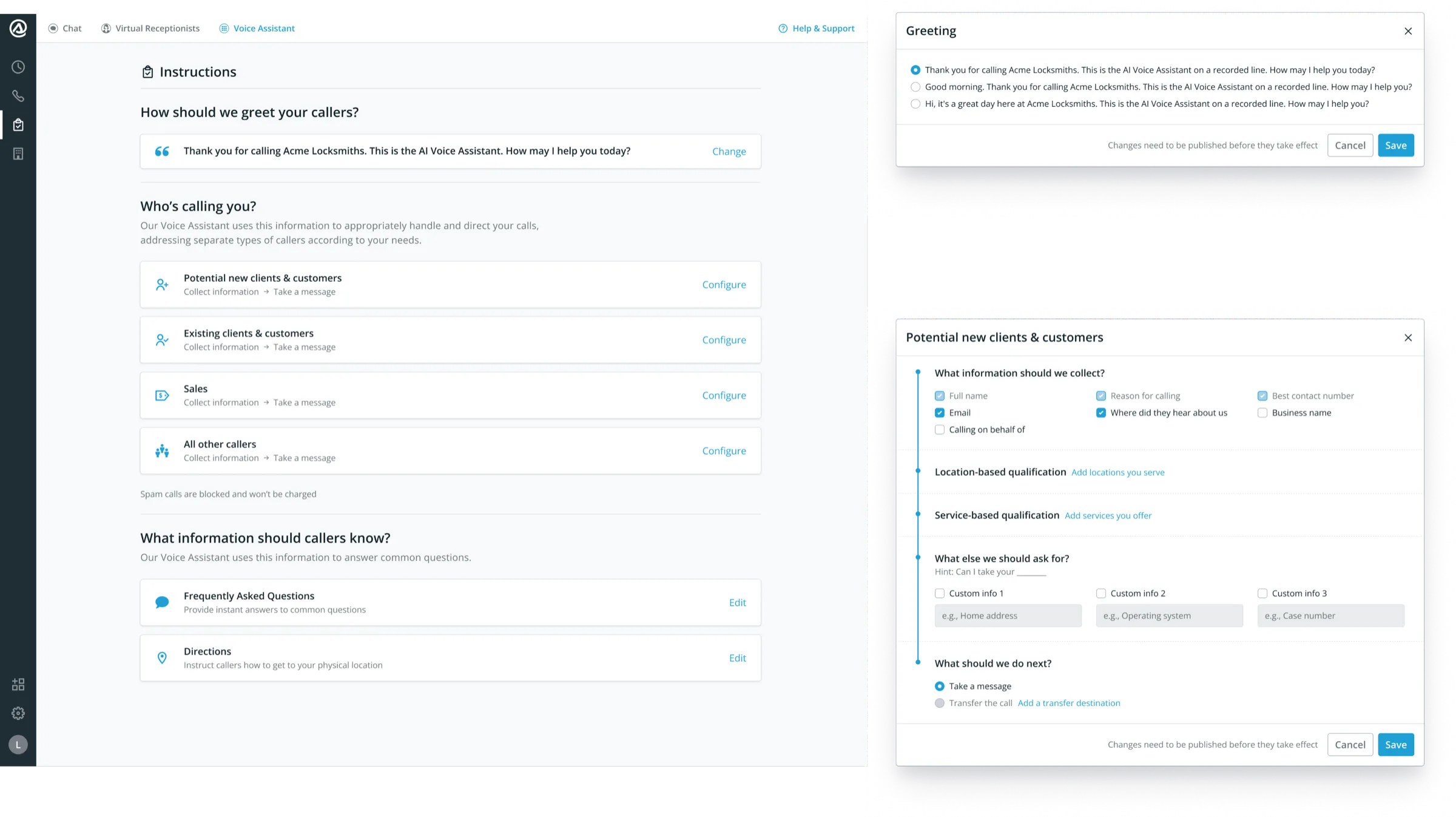
Zero setup AI voice — Creating an "it just works" experience for an AI receptionist service.
Try and describe the structure and flow of the last phone call that you had. I bet you can't. If you were presented with all the options to configure all of it I bet you still couldn't.
It's hard to solve the cold start problem in software. It's even harder when you don't have a mental model for describing what you want.
The most important aspect for me was to deliver an "aha" moment (and therefore value) as soon as possible after payment. I made sure that Smith's AI Receptionist just worked right out of the box.
View project details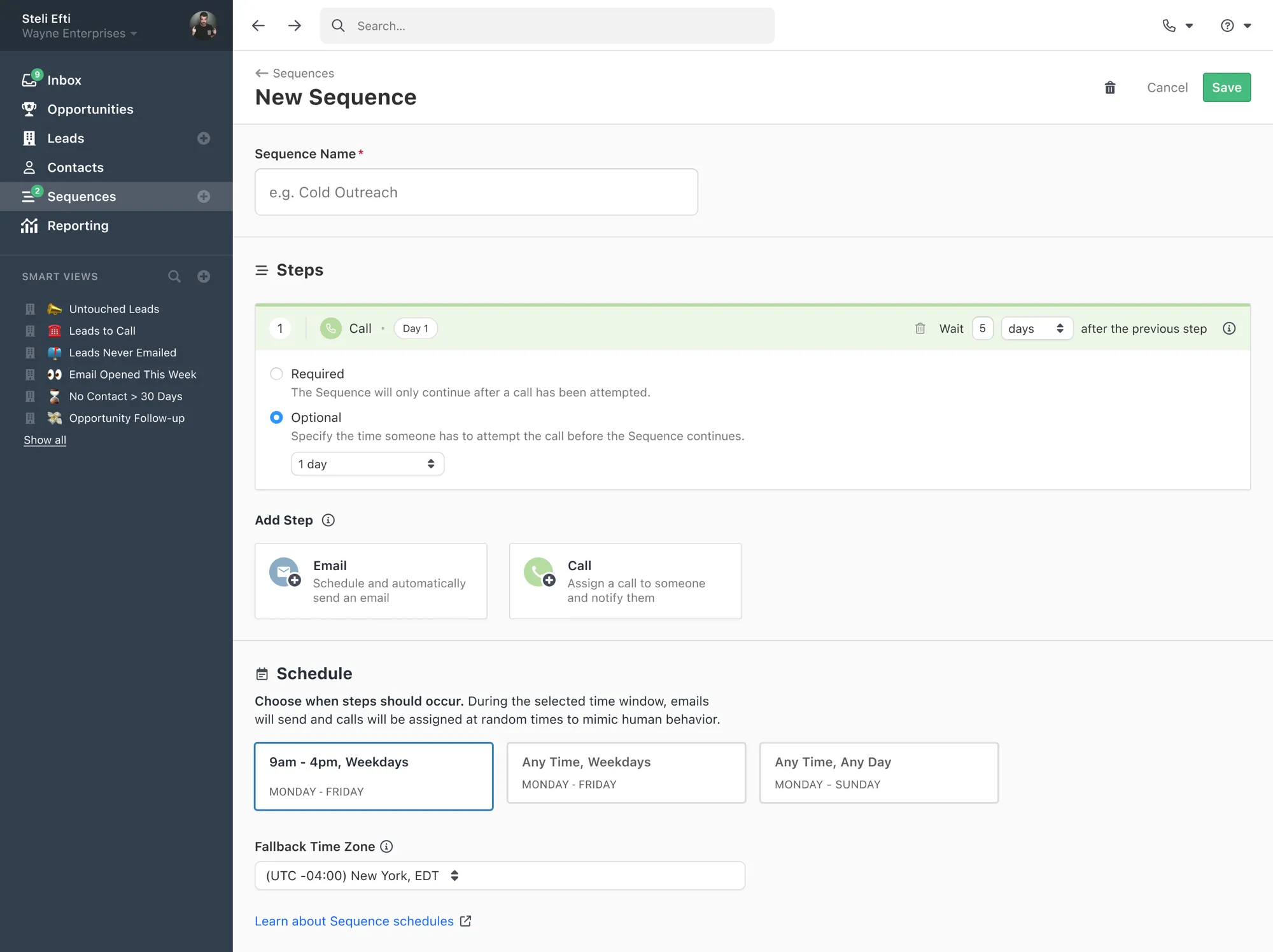
Automating Sales Outreach — Rethinking complex sales workflows to reach leads with the press of a button.
Close needed its own sales sequencing before more customers left for competitors' email tools. I designed it inside a six-week shape-up cycle.
The harder follow-on was bringing calling into the same automated cadence: a step only a human can actually carry out.
View project detailsDefining and measuring quality for an AI voice experience — Making call quality visible, so a bad week reads as a dip and not a failure.
A single bad early call was the biggest predictor of cancellation — often before a customer had ever heard one of their own real calls.
The product was opaque. Customers couldn't tell a temporary issue from a systemic one, so they assumed the worst and made permanent decisions about temporary problems.
This was a measurement gap, not a support problem. I defined what a good call actually was, and made the score visible.
View project details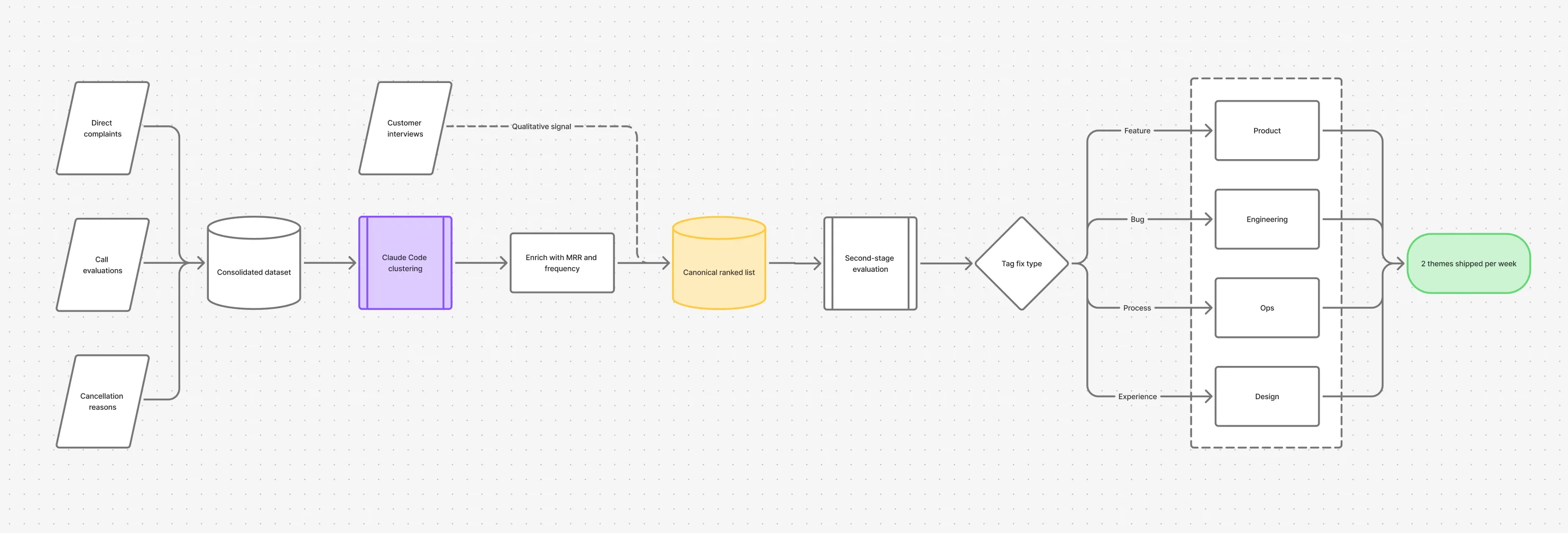
Turning 1,400 complaints into one ranked churn list — One ranked churn list, built from complaints scattered across five teams.
Complaints lived in three different places, so every team prioritised from different numbers and the conversations stalled into opinion.
Leadership would post one customer complaint in Slack and we would drop everything. Nobody could say whether it had happened once or four hundred times.
We were prioritising on volume of attention, not frequency of occurrence. I built a pipeline that turned 1,400 scattered complaints into 115 ranked themes.
View project details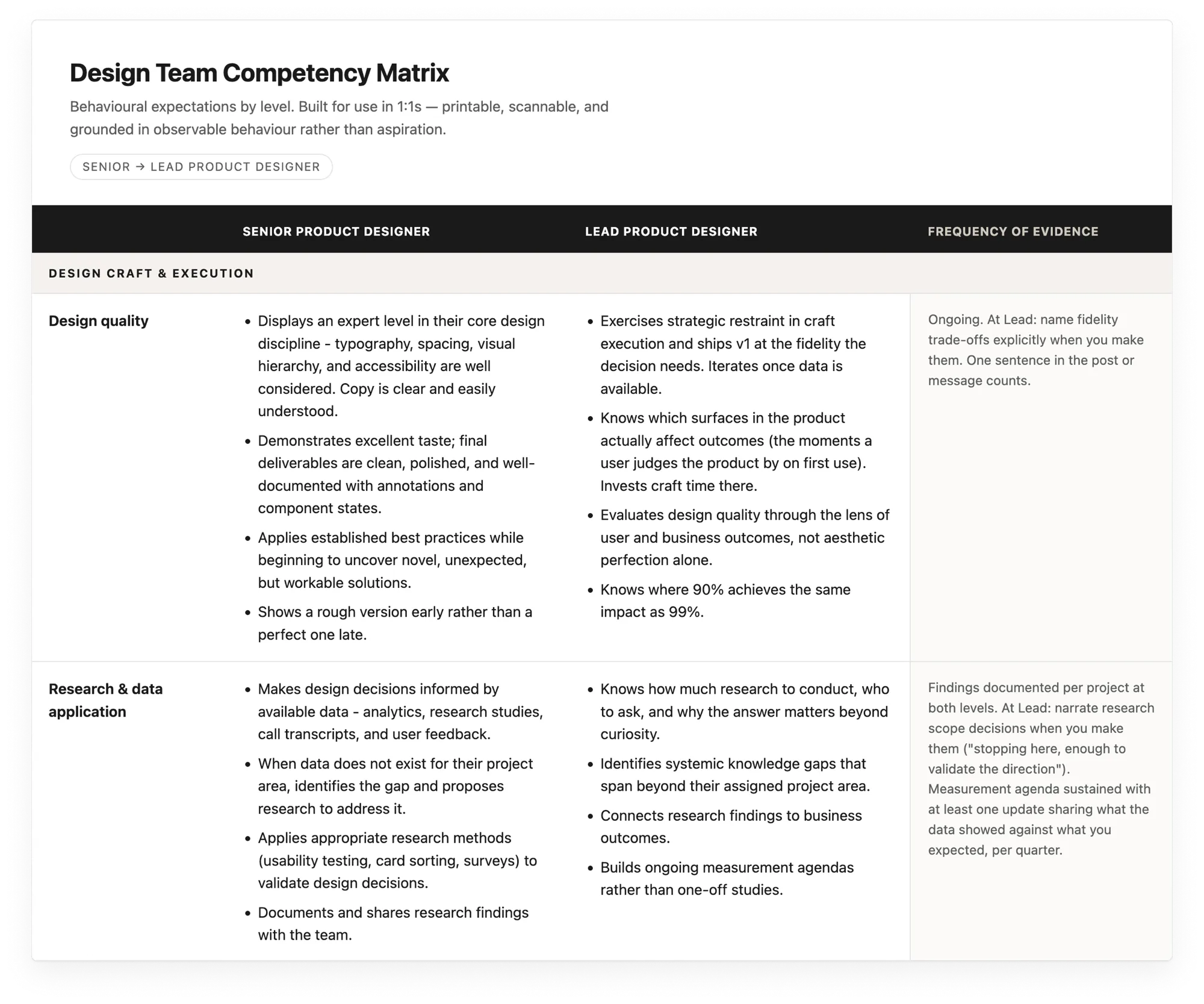
Leveling the design team: a rubric designed for a real promotion
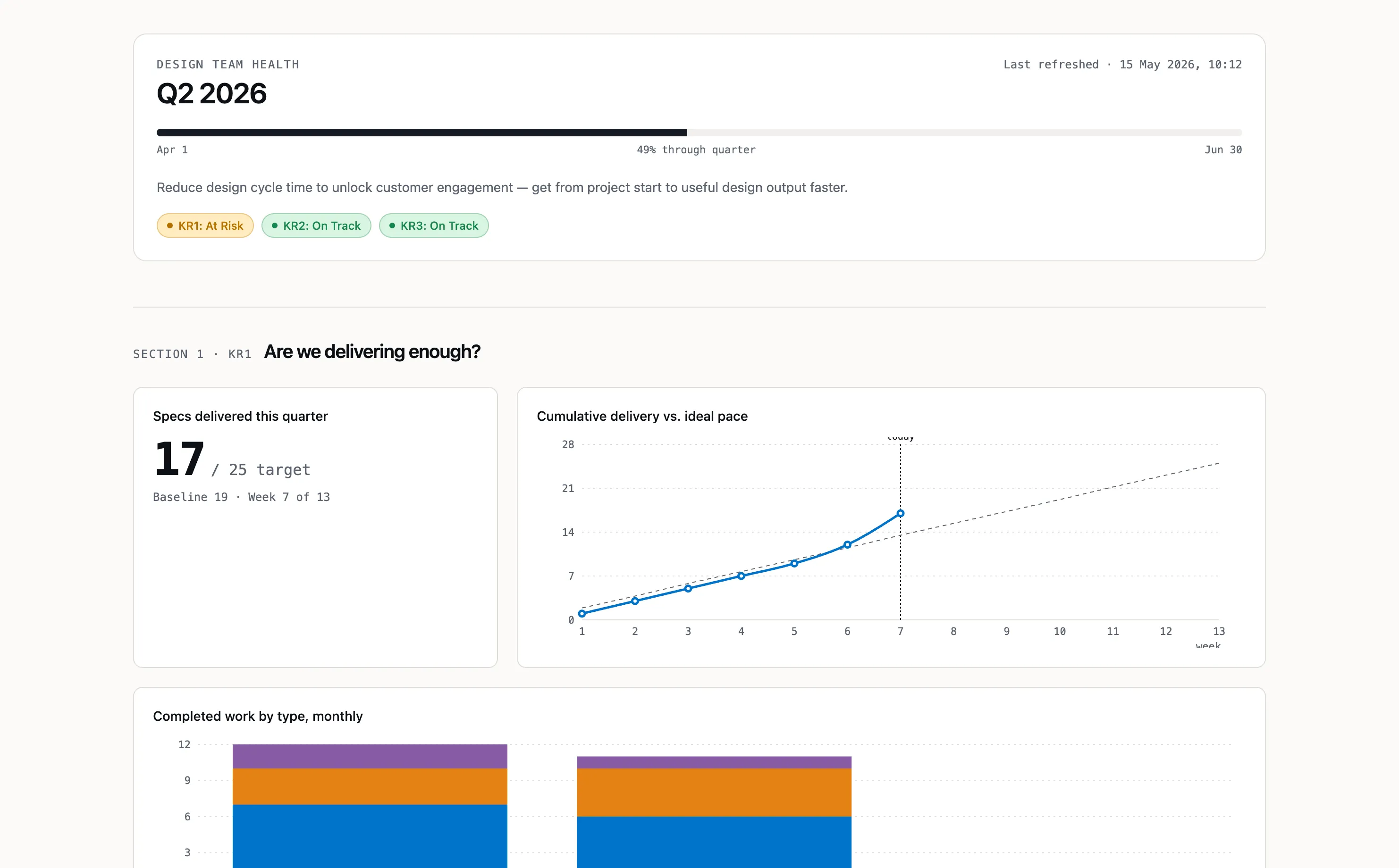
Making design legible: building an operating layer for a growing team
From invisible design work to high-impact business influence — Coaching a designer from doing good work to being seen doing it.
The shaping conversations were happening in DMs. When they did share publicly it was a wall of text with no clear ask, and they wondered why nobody engaged.
They believed good work was enough. At a startup where you want a promotion, that belief quietly costs you the promotion.
I gave them a structured communication plan with a timeline and milestones. Nine months later they owned their own initiatives.
View project details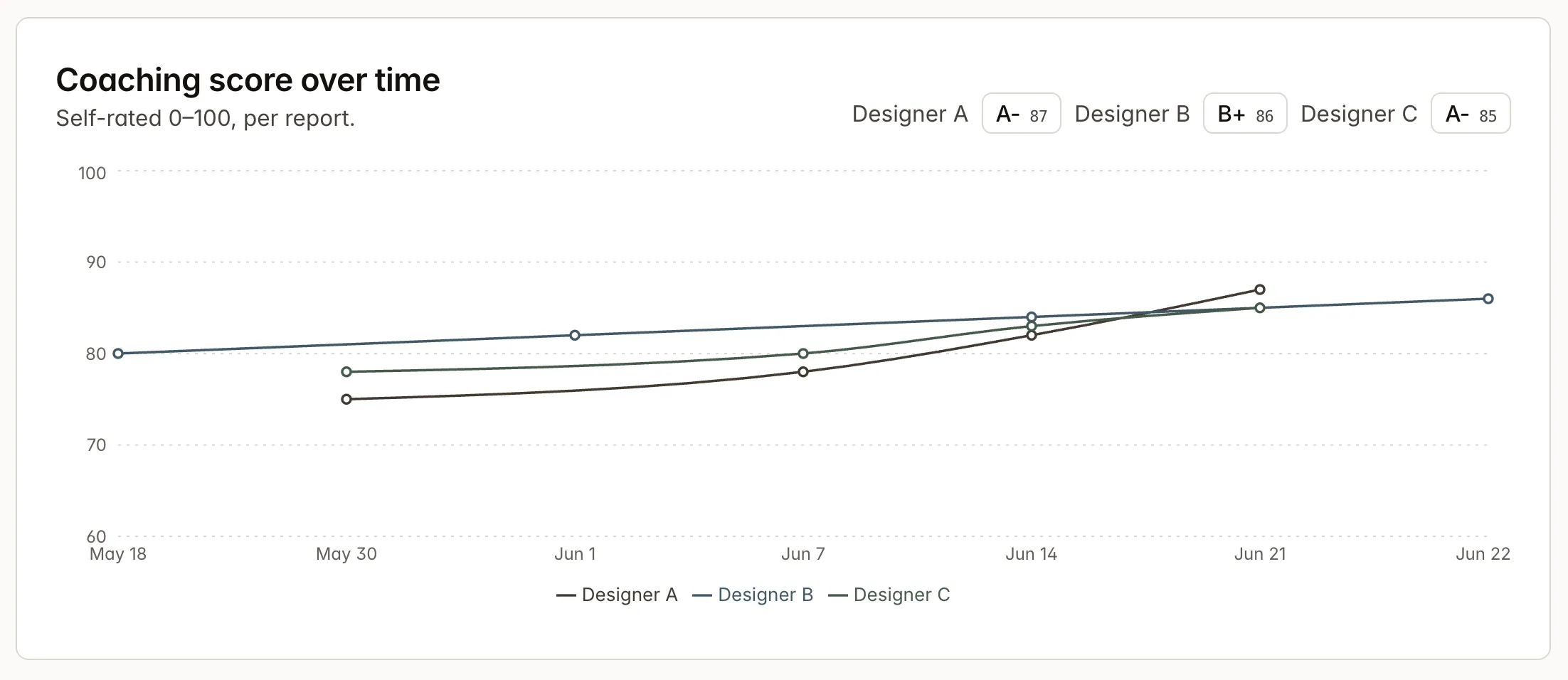
Calibrated coaching: same level, different needs, and how I scored myself
Featured Writing
- Side ProjectPinnedDesigning an invisible premium radio product for people who hate technologyWhen smart speakers aren't an option, you build something better.
- Side ProjectAn old Kindle now tells my wife when I'm in a meetingA shared calendar showing my meetings wasn't as useful as I thought so I turned an old Kindle into an e-ink display using TRMNL and mounted it next to my office door.
- Side ProjectFixing the AI writing problemAI is a tool. It should communicate like one. I created 3 skills to improve AI writing and a test suite to determine how much they help.