I designed Close’s first in-product sales sequencing: multi-channel cadences from email to human-dialled calling, closing the gap that was sending customers to standalone tools like Drip. Sole designer, working in six-week shape-up cycles, 2018 to 2021. The calling model shipped in 2022, from my design, after I’d left.
Close needed its own sales sequencing before more customers left for competitors’ email tools. I designed it to ship in six-week shape-up cycles, and the harder follow-on was bringing calling into the same automated cadence: a step only a human can actually carry out.
Customers were running cadences outside Close
Competitors had launched email-sequencing tools and Close customers were drifting to them. To run a real cadence inside Close, customers were stitching together smart lists and linking them out to separate products that managed the follow-up timing for them. They paid for those extra tools, did manual work to keep everything in sync, and ran the most important part of their sales process outside the CRM that was meant to hold it. Each workaround was another reason to leave.
We knew from the teams talking to customers every day. Sales and support kept hearing the same thing: customers were running their cadences in Drip, and we often recommended it ourselves; we were sending our own customers to a competitor to do the job Close couldn’t do yet.
Ship the first version in a six-week cycle
The goal was to take a sales playbook (the run of touches a rep makes to win a lead) and turn it into software: a repeatable, automated way to reach out and follow up.
The constraints made that ambitious. Nothing tracked what happened to a lead while it sat in a sequence, so that had to be built underneath the design. Email had to come first, because the sending system already existed and an email needs no human to go out; SMS would follow. The shape-up methodology put the first version in a hard six-week box. I tiered every cycle to fit it. P0 was what had to ship for the feature to work at all; P1 was what made it good to use; P2 and P3 were the enhancements (animations, empty states, niceties) that could wait for a later six weeks.
I owned the design across the whole feature. I was Close’s first design hire, employee #17, and the sole designer on this work; I partnered closely with the front-end engineers and the Product Manager. I turned user research and competitive analysis into the requirements, worked with the Product Manager to phase the scope down to something shippable, prototyped the multi-step flows, and designed every screen, state, and edge case before writing the specs for engineering. A second designer and PM joined later, did some exploratory work, and took the feature over as I left.
I put the research where the risk was. For the email cadence I relied on our own use of the product (we ran Close’s sales and marketing through it) and on sitting with the sales and marketing teams to learn how they stitched external tools together; the consensus was strong. For the calling work, which had no precedent, I ran interactive prototypes past at least three customers before building it.
Sketching the cadence before building it
I started in low fidelity. Sketches and flows let me try several shapes for a sequence quickly, and see which ones made sense to users and stakeholders and which actually fit the six-week scope.
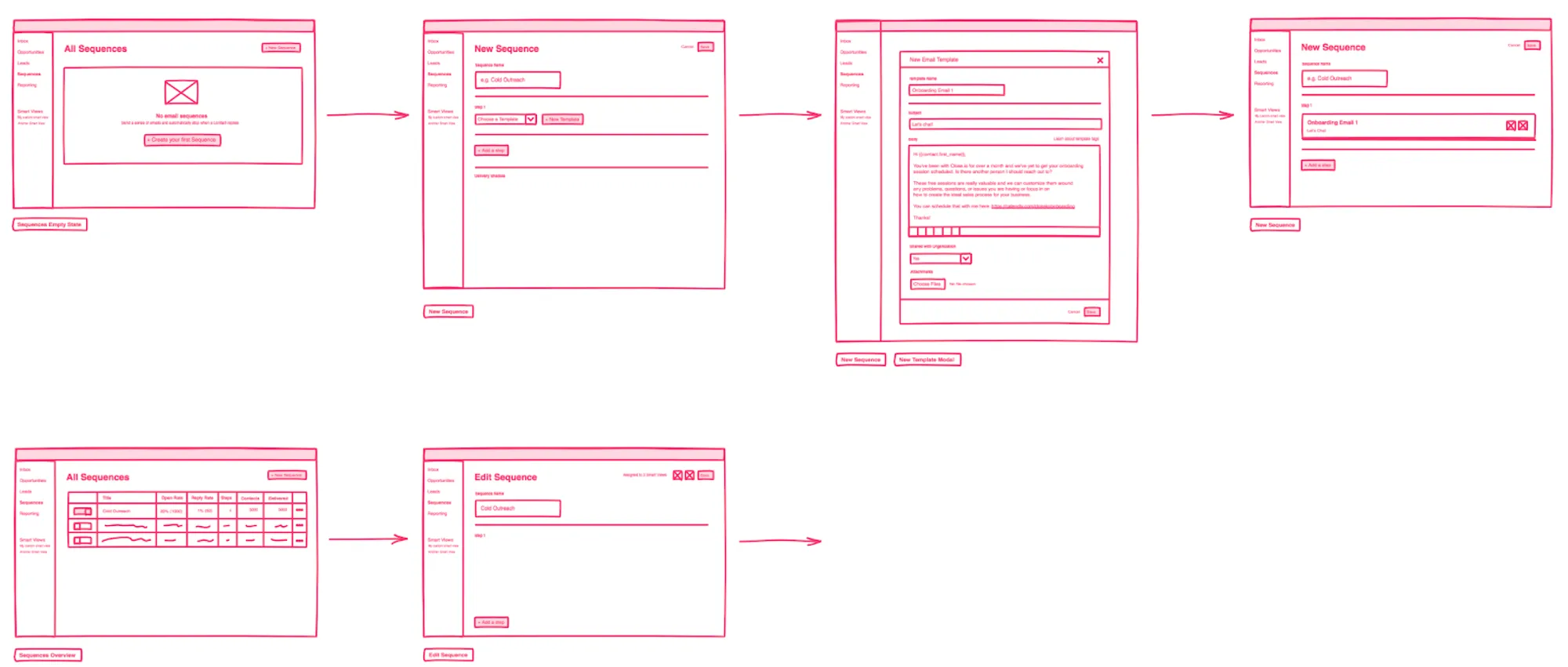
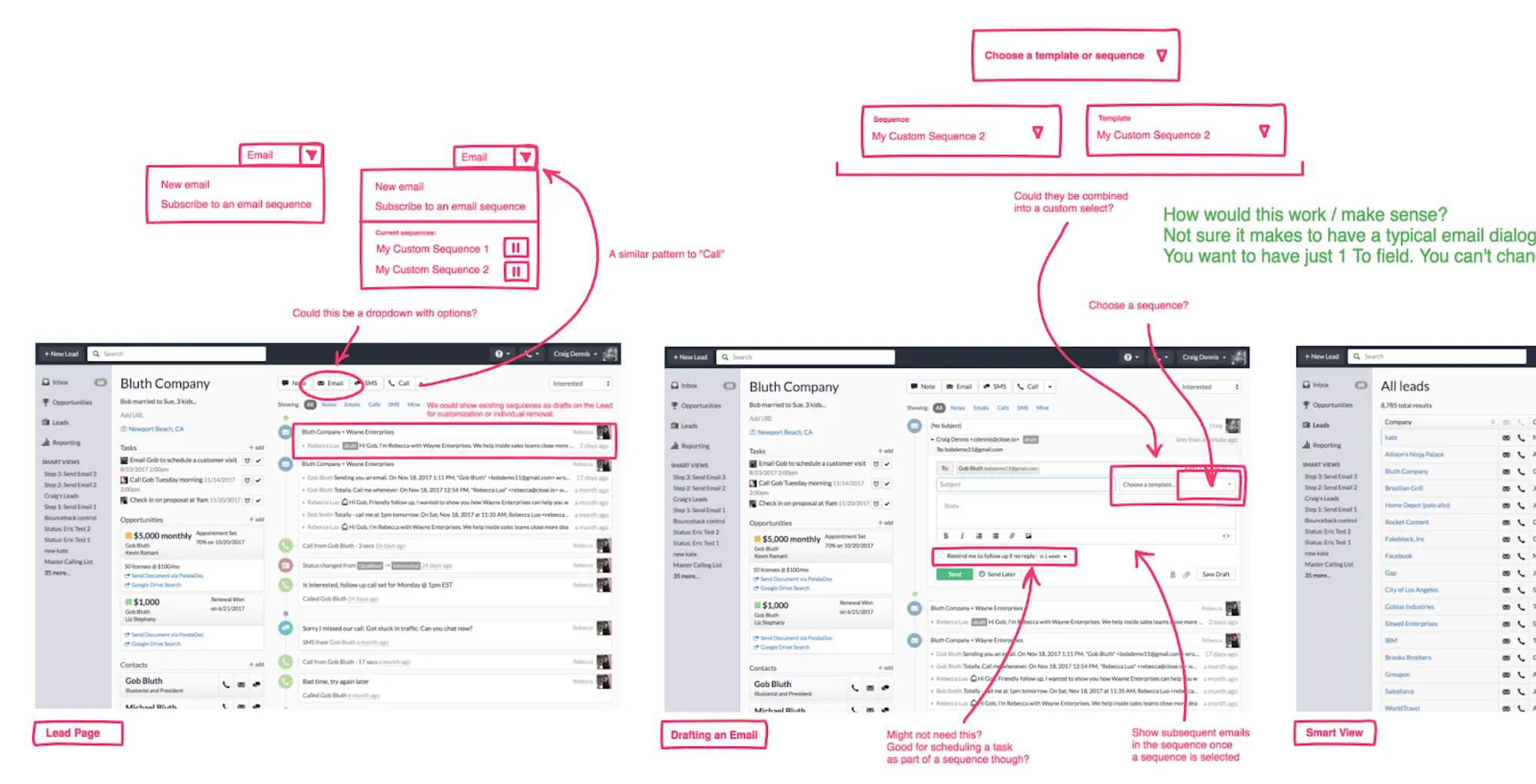
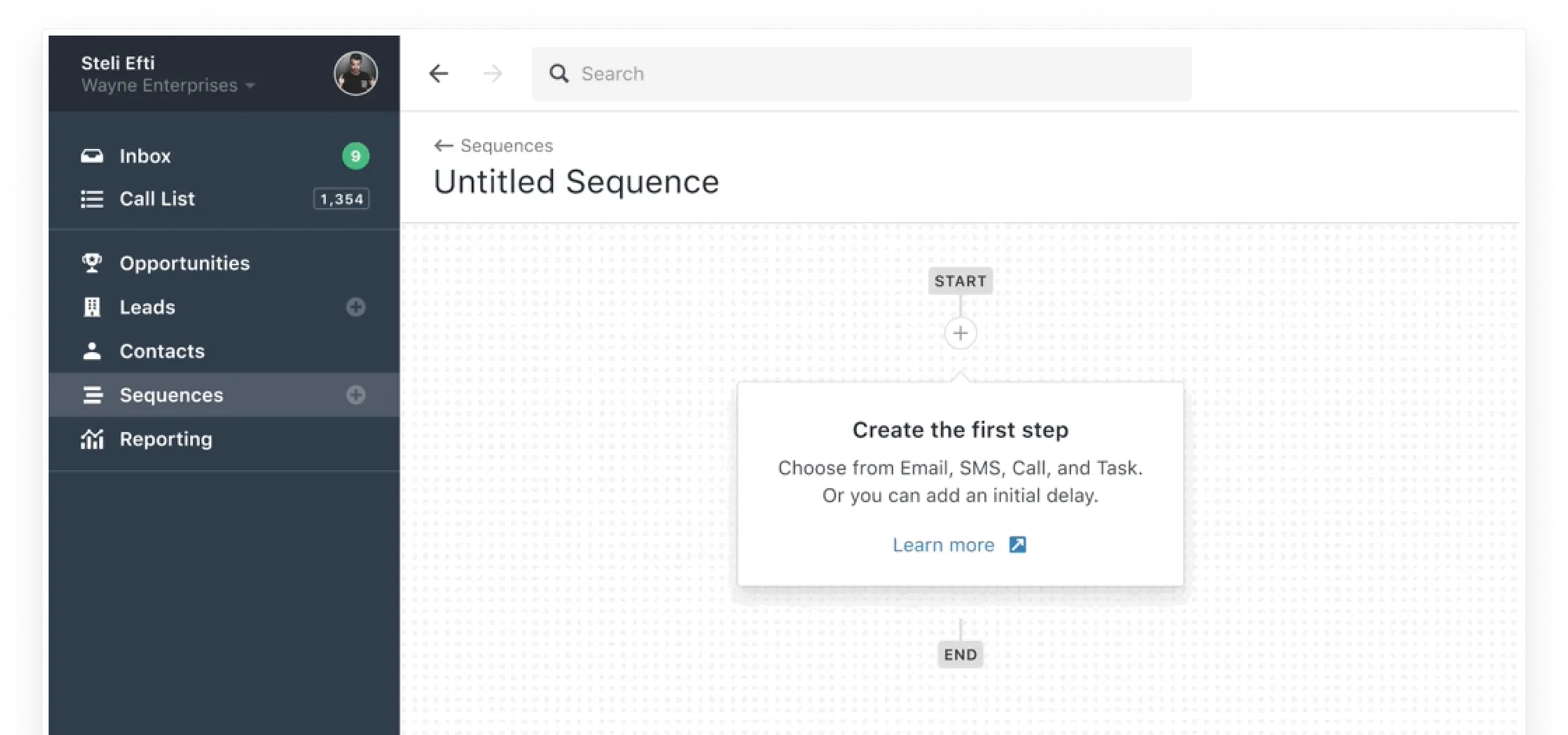
Some interaction ideas needed more fidelity to judge, so I ran higher-fidelity concepts alongside the low-fi flows to feel out how a multi-step sequence would be built and edited.
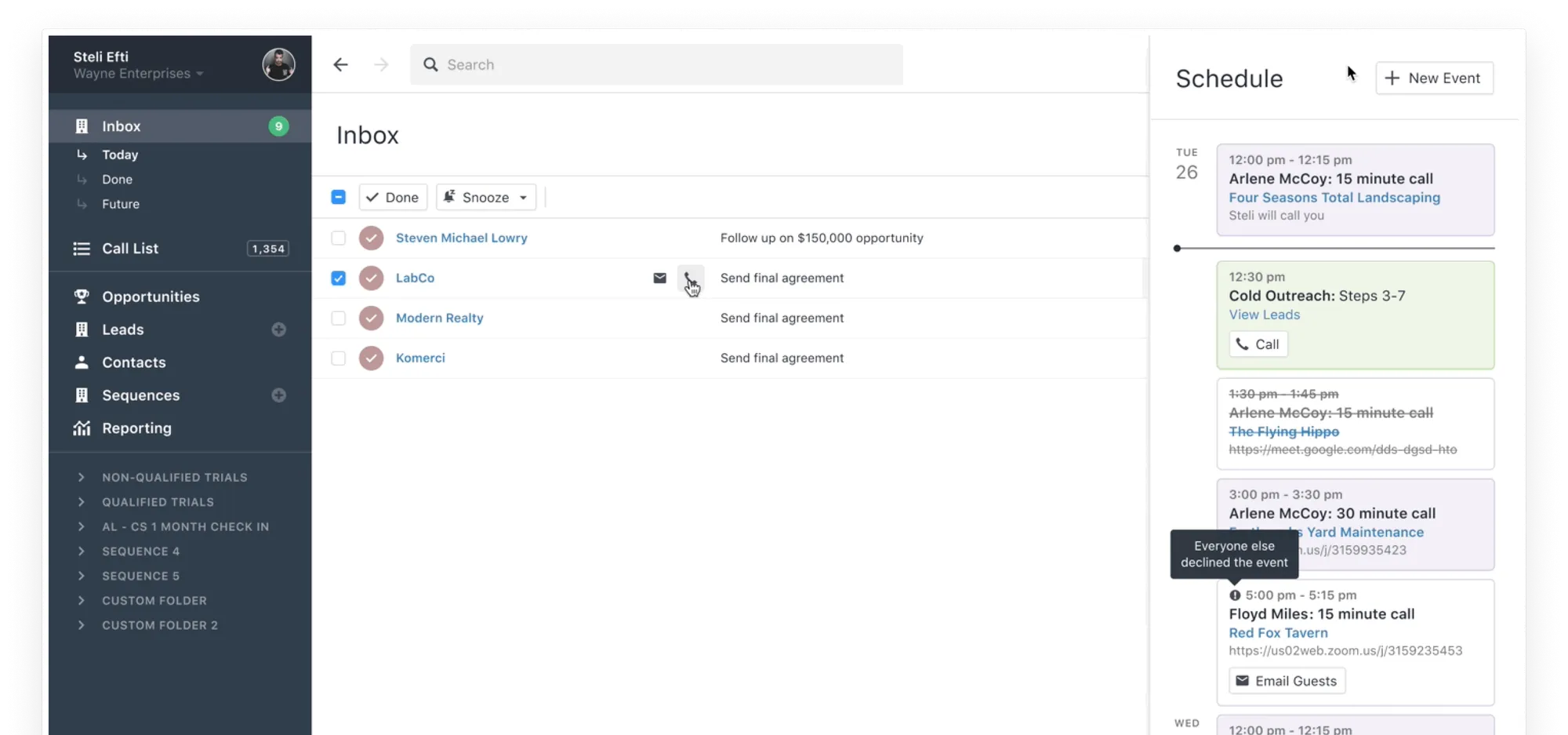
Only a human can make the call
We shipped email first, on purpose. An email goes out with nobody in the loop, so it was the quickest way to prove the cadence and hit the deadline. Calling was the part that made the whole idea hard.
An automated sequence assumes the system controls the timing of every step. That holds for email and SMS; it falls apart for a call. The system can schedule a call, assign it, and remind someone it’s due, but it can’t make the call. A rep has to dial it themselves, and they do it on their own time, in between everything else in their day.
So the question was never how to automate calling. It was how an automated cadence keeps its shape when one step depends on a human doing something manually, maybe late, maybe not at all.
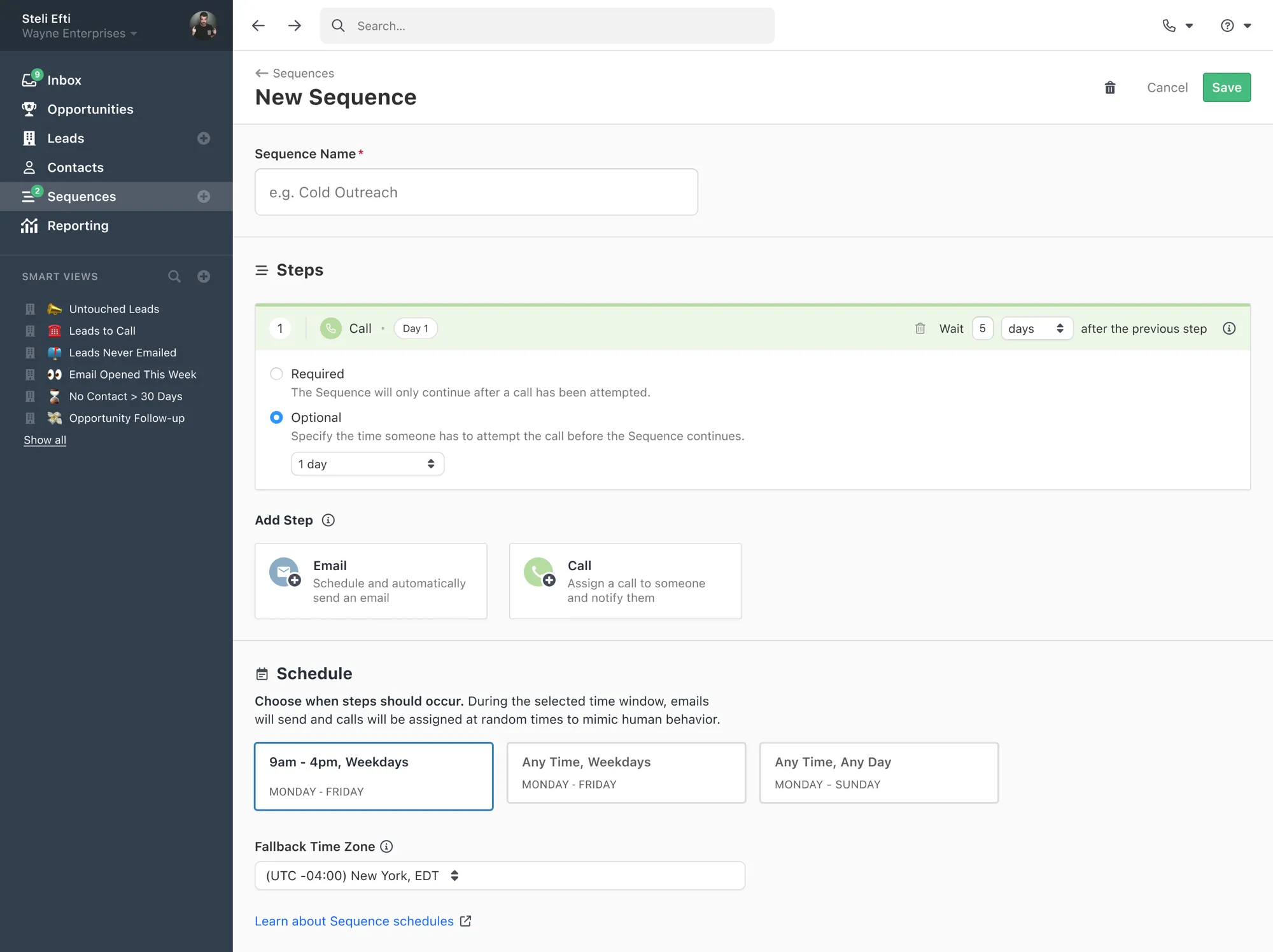
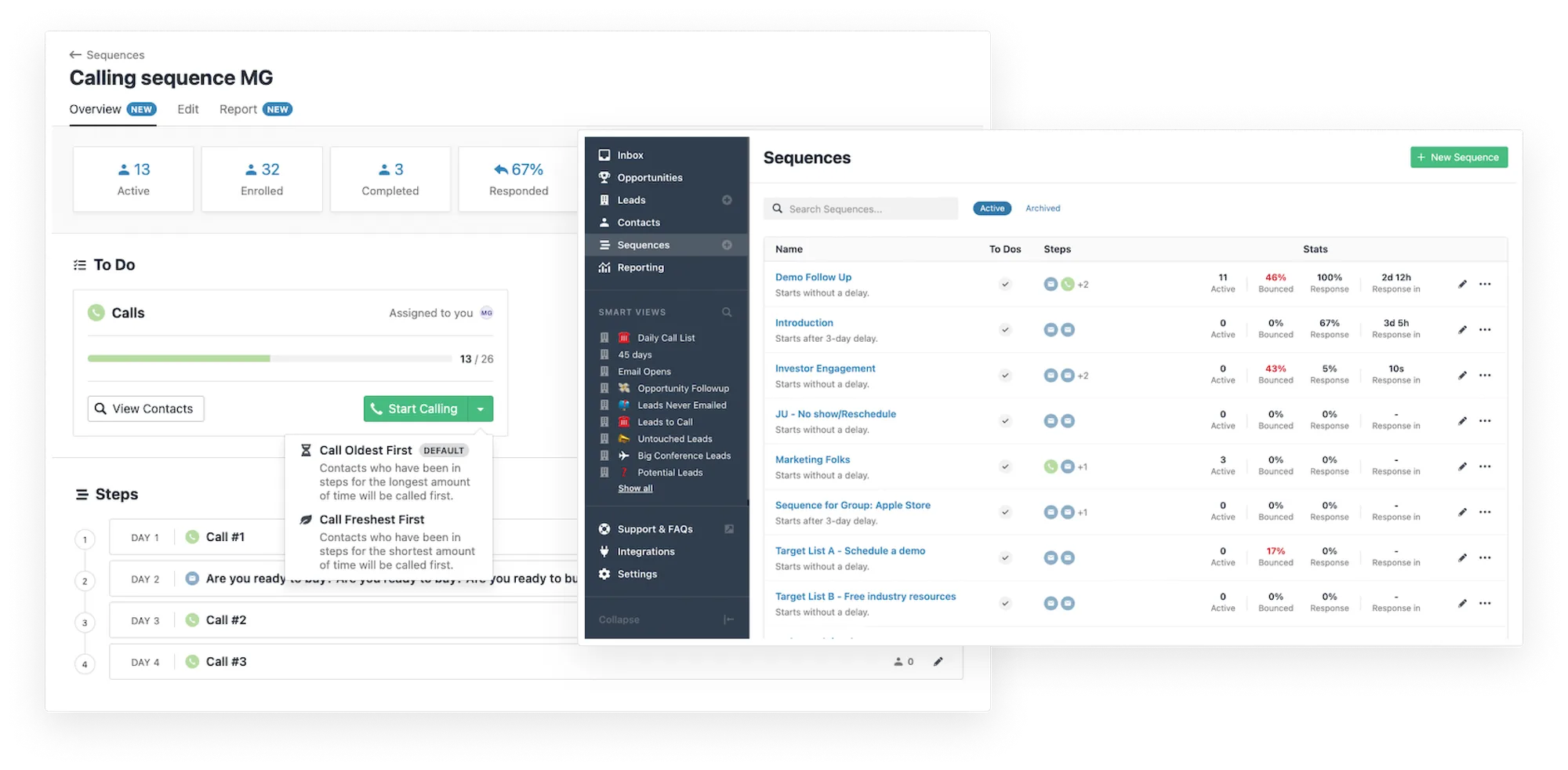
The answer was to make a call a step like any other, then let the cadence flex around the person instead of pretending the person is a machine. A call sits in the sequence with the same delay controls as an email (start straight away, or wait a set number of days after the previous step). Each call is assigned to a person or a group, who works it from a To Do queue on the sequence’s Overview, oldest contacts first by default or freshest first.
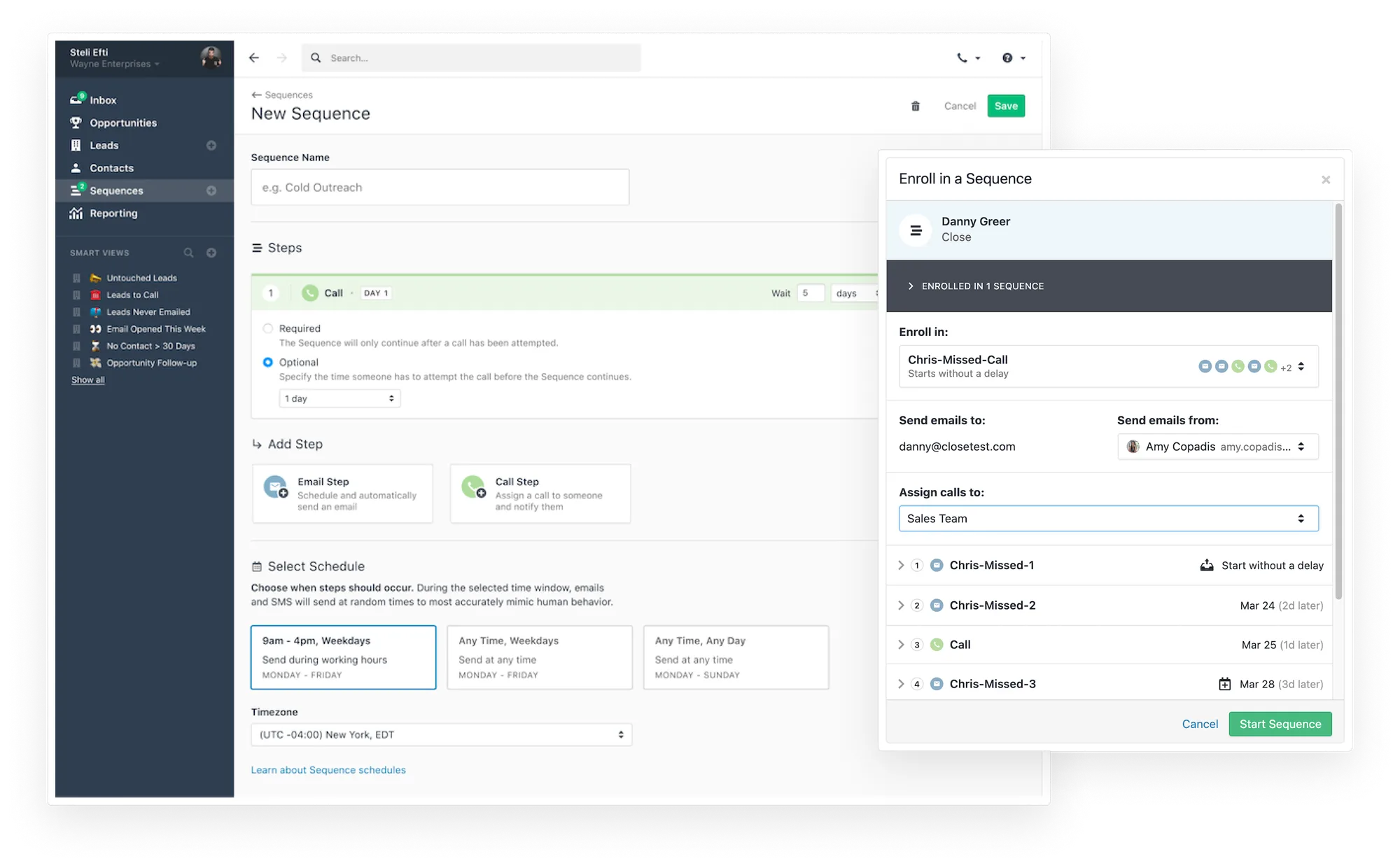
The decision that actually resolved the tension was marking each call step Required or Optional. Required holds the sequence until a call has been attempted, so a rep can’t quietly skip the human touch and let the automation run on without it. Optional gives a set window to try, then moves the lead on if the call never lands, so one un-dialled number doesn’t stall the whole cadence. Scheduling became timezone-aware too, so a call reaches someone at a sensible local hour rather than whenever the timer happens to fire.
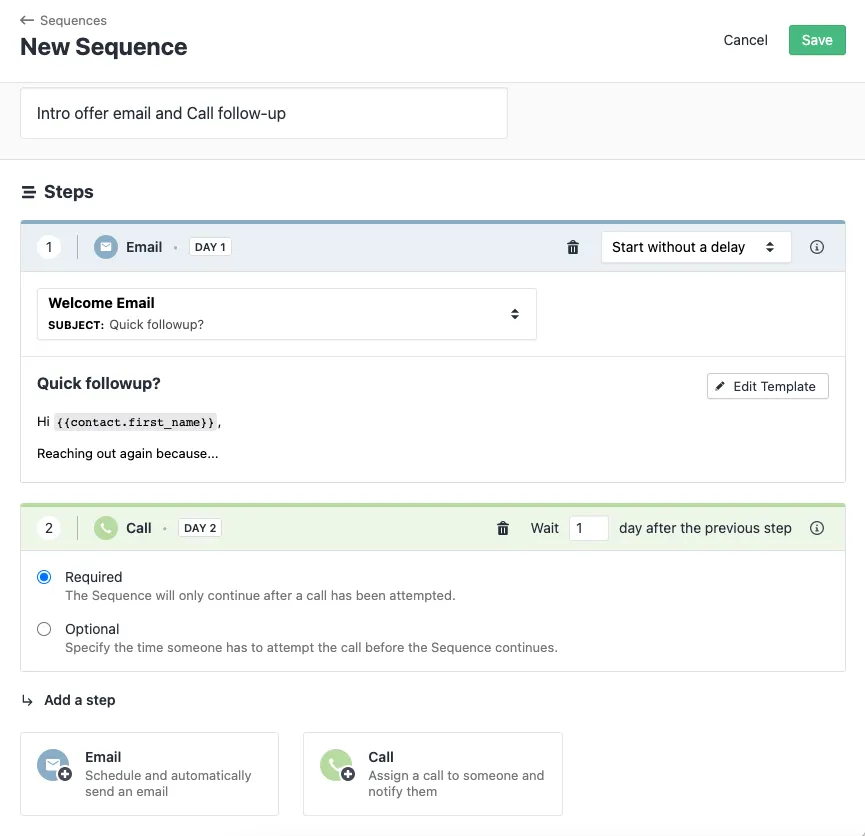
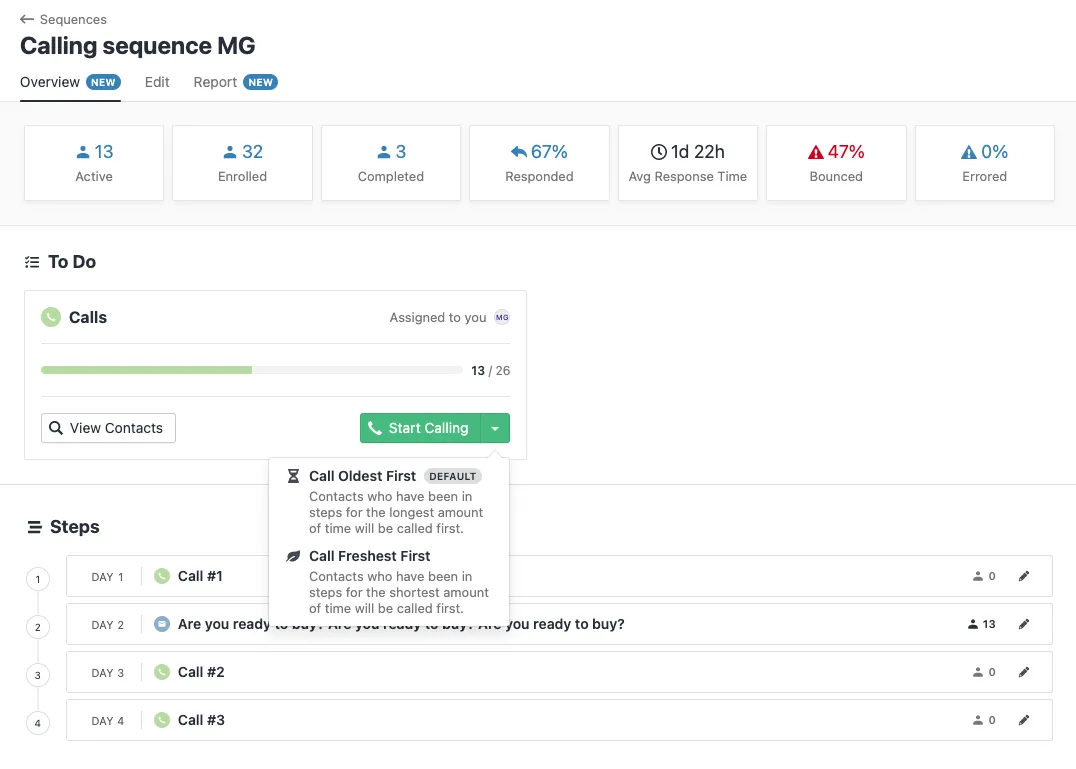
The automation does the bookkeeping; the rep does the talking.
Sequences shipped on time, and customers responded
The first version shipped inside the six-week box. The aim was to bring sequencing in-product before more customers left for competitors’ email tools, and the customers testing it responded well.
I’m super excited to start testing on a bigger scale, this could totally change all the janky automation I’ve set up over the last year!
Keeps the team more organized—using Close more.
The clearest signal it worked came later. Customers stopped asking whether to use it and started asking for more: shorter delays between emails, multiple sends in a day, SMS, calling, workflows.
Sequences became something sales leaned on in demos. The calling model I’d designed shipped to customers in 2022, after I’d left Close, walked through by Close’s Head of Sales, Nick Persico, in the public release notes. The interface that shipped is my design, realised.
Given the work again, I’d change how I got there. I was scrappy with research on this one: three customers for the calling work, none for the email cadence, relying on internal consensus and our own use of the product. I’m far more adept at usability testing now, and I’d test more options with the customers asking for the feature, and validate them before building. Covering everything as the sole designer was the theme of the work; what I took from it was learning where the research effort should go.