Context
Smith.ai’s human answering service handles tens of millions of calls annually. We used that knowledge to build an AI voice assistant that could qualify leads and handle intake without human intervention.
The product scaled to hundreds of paying customers and reached 6 figures ARR in its first year.
Goals
- Make sign-up and configuration self-service (no sales calls or manual onboarding)
- Build AI voice conversations that feel natural and work reliably in production
- Enable customers to go live immediately after signup
My Role as Director of Product Design
- Partnered with the Group Product Manager to define and shape the complete product experience
- Decomposed the full initiative into discrete, deliverable projects
- Managed and mentored a team of product designers across multiple workstreams
- Led hands-on design for the critical instructions and configuration experience
- Established design systems and patterns for conversational AI interfaces
Transitioning to Self-Service
Initially, customers had to go through manual sign-ups and multiple onboarding calls. AI supported only some aspects of the workflow, while humans handled the majority of tasks. Our goal was to automate the process, from sign-up to configuration, allowing customers to create a fully functional voice assistant with minimal intervention. This required a shift in mindset—no longer just a tool for human agents, but a product capable of standing alone, ready to answer business queries immediately upon sign-up.
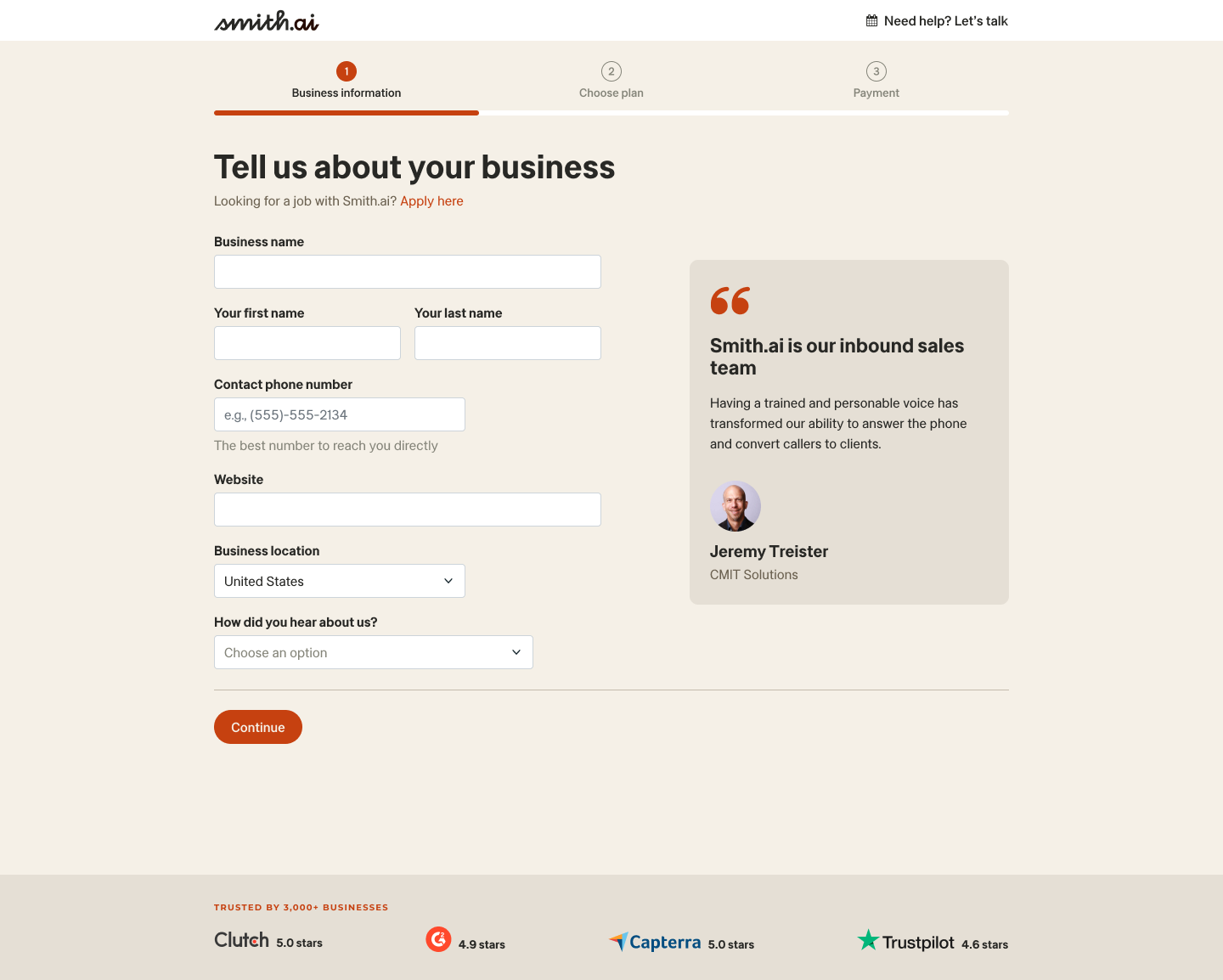
We designed a conversion-optimized flow that would take payments upfront and provide customers with an excellent first-use experience. The challenge was to make everything “just work” without requiring any configuration, allowing the AI assistant to be active immediately upon registration. This meant designing not just a user-friendly interface but also a seamless backend that integrated call transfers, custom responses, and data collection.
Research
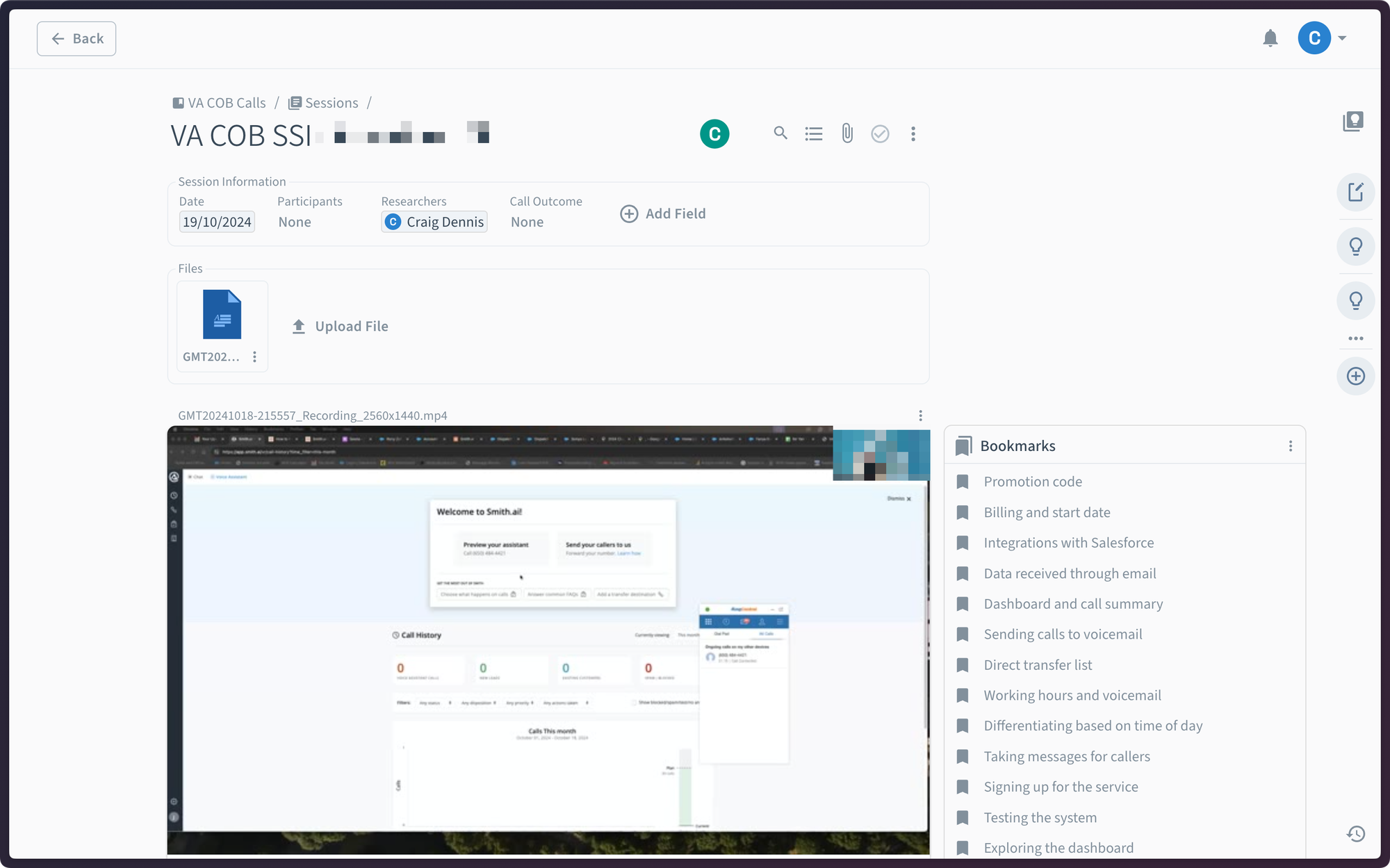
We began by studying human conversations in depth. What makes a conversation feel natural and engaging? Concepts like active listening, mirroring, and turn-taking became key elements we aimed to simulate in our AI assistant. We used existing customer interactions and voice call logs to identify patterns of what made conversations successful, as well as areas where AI could fill gaps that were traditionally handled by human agents.
Capability Assessment
It was clear there are some things that AI can’t do yet and so we needed to understand the core requirements customers have for an answering service and map that to AI or humans.
The capabilities of the voice assistant needed to cover the following:
- Greet the caller in a natural way and ask how they can help
- Qualify callers based on services that customers have
- Capture additional information from callers (if they are qualified)
- Transfer specific types of calls to customers
One thing the AI is really bad at is pronunciation and spelling, especially when it comes to email addresses. To cover the shortfall in the technology we applied several approaches.
We structured our prompts and conversational flow to ask for clarification of spelling in certain circumstances and have a human agent ready to take over the call if the caller requested for the AI was unable to confidently obtain the information.
Designing Conversations
Designing conversations was a major focus of our development process. We had to ensure that the AI’s responses felt fluid and human-like, while being capable of handling the nuances of business inquiries.
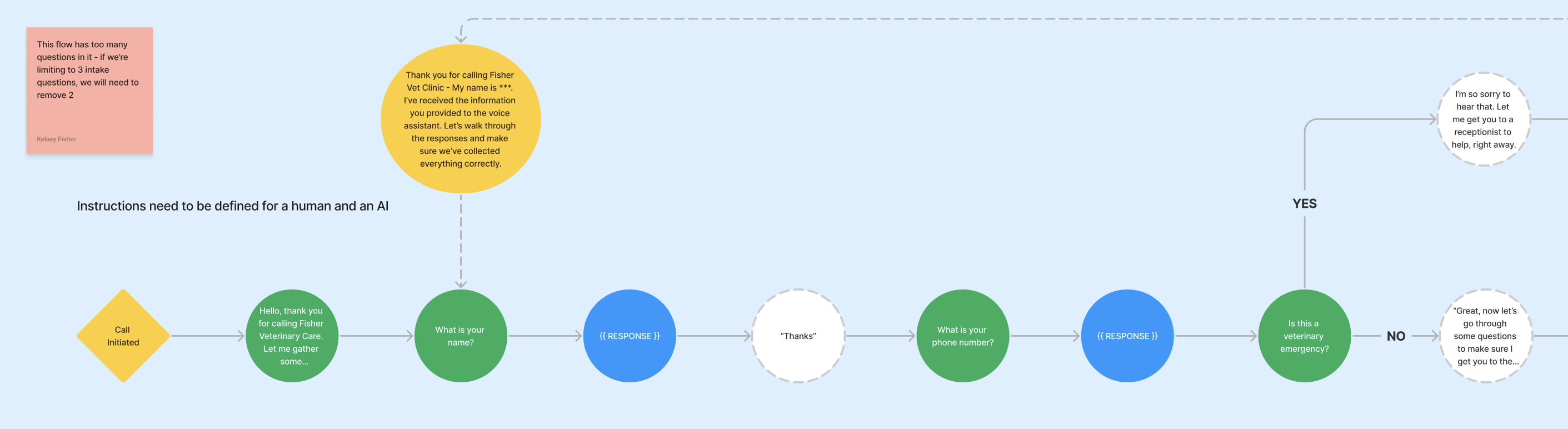
We used a combination of pre-defined prompts, retrieval augmented generation, and context retention to design conversations that flow naturally unlike any other AI voice service.
Predefined prompts give us the ability to set objectives, tone, and guidance for how to handle specific parts of conversations.
Context retention allows us to ask “How can I help you” at the start of a call and use that information to answer questions later in the call; exactly like a human would.
We used a novel approach with retrieval augmented generation where we can dynamically load specific parts of branching conversational logic to prevent overloading the context window and confusing the AI.
Abstracting the Complex
In the human-assisted service, the system required extensive documentation and manual configurations by humans on both the onboarding and updating sides. Moving to a self-service model meant needing to simplifying the instructions both by artificially limiting the conversational complexity and restricting the controls that are exposed to customers.
The new interface had to represent a complex system in an easy-to-use way, avoiding overwhelming new users.
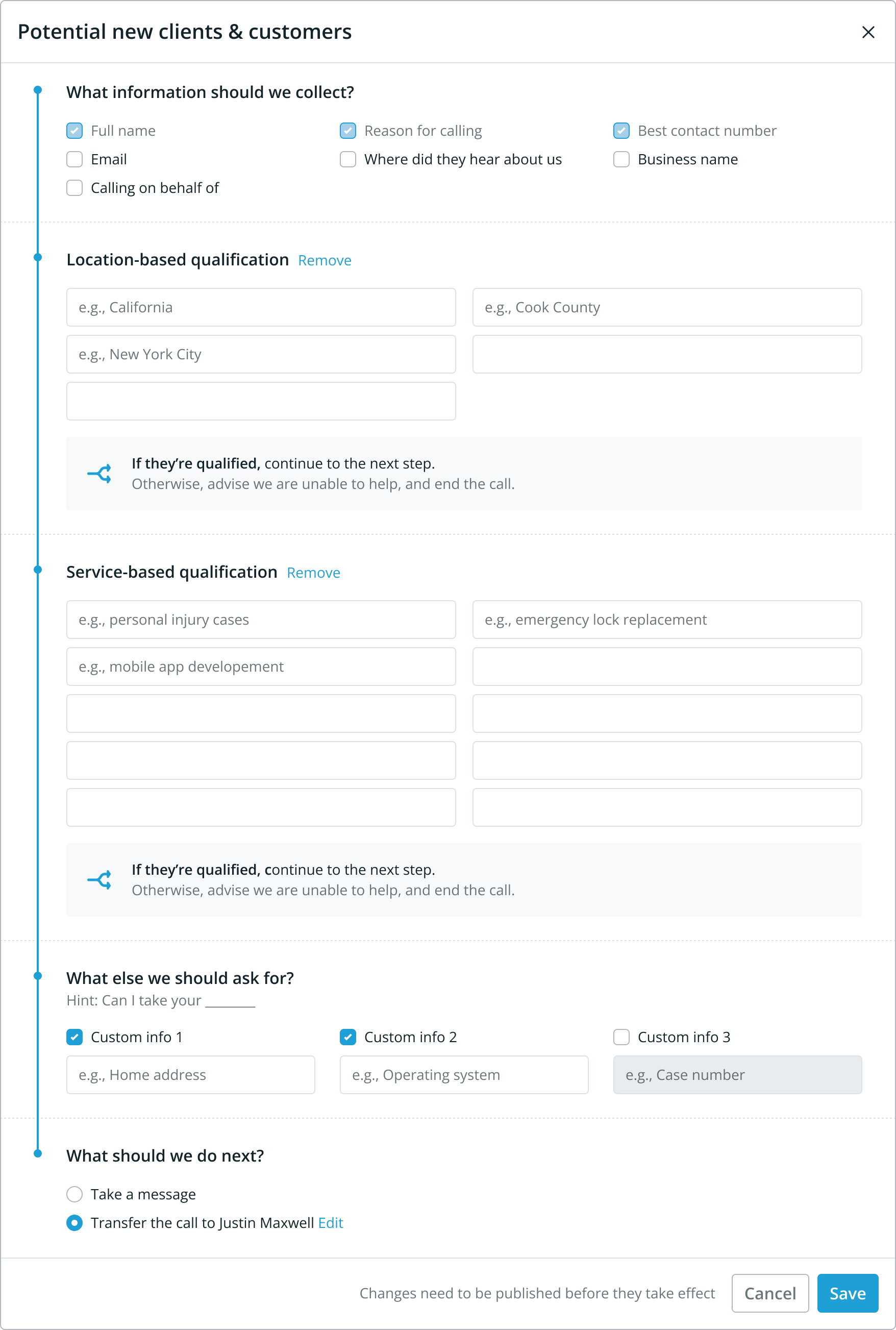
To achieve this, we opted for a simple linear representation of a conversation. Any branches (such as after being qualified or disqualified) were represented within this structure.
Different types of calls were distilled down to 5 common patterns:
- Potential new clients
- Existing clients
- Sales
- Spam
- All other calls
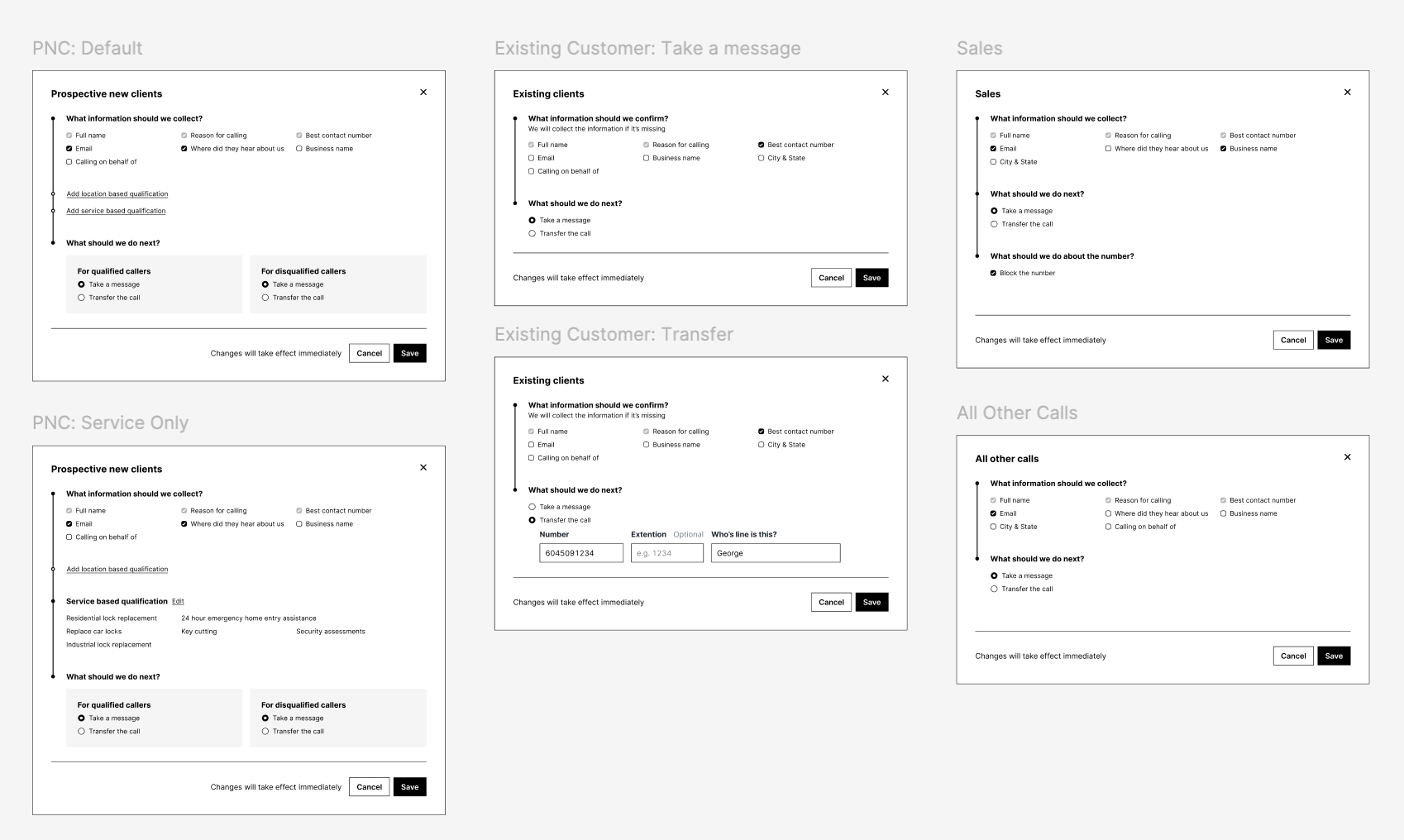
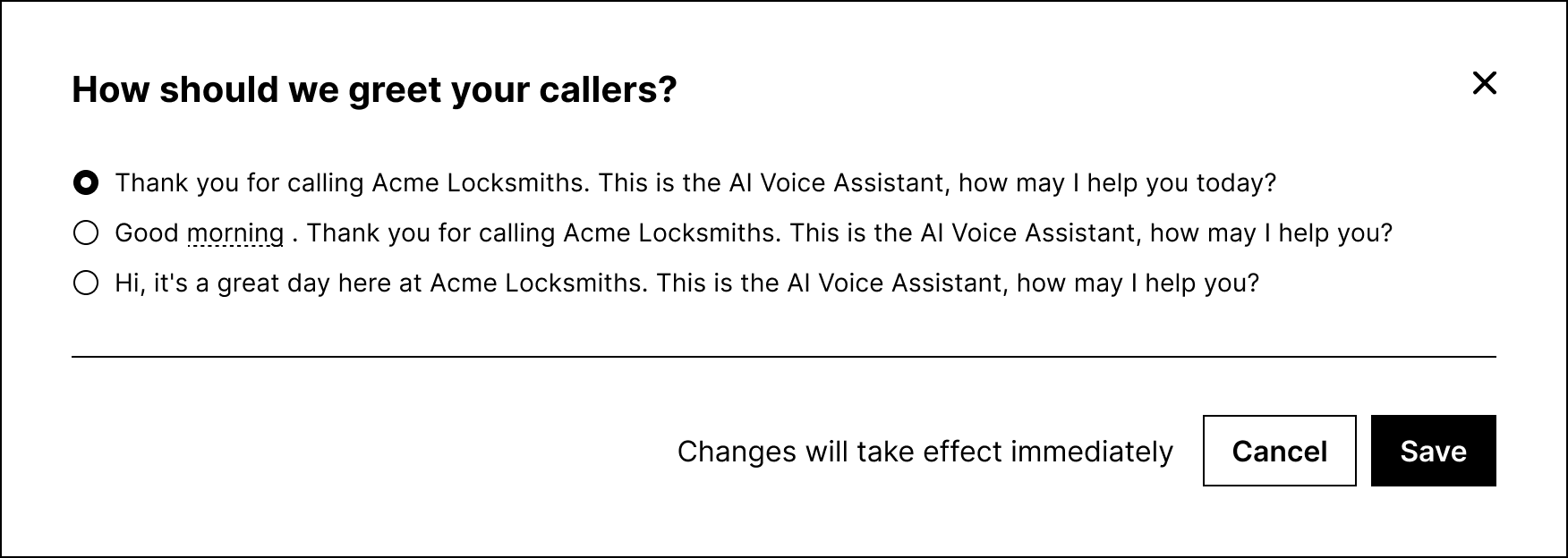
Initially, we kept the greeting prescriptive until we understood from customers exactly how they wanted to use the greeting. When we offer a free text field, we need to make sure that “how can I help you?” is still asked to start the conversation as well as respecting call recording disclosure.
Below is the current most complex caller type; Potential new clients.
Iterative design feedback loop
We implemented a structured process to capture and act on customer feedback from various channels like user interviews, sales, and support interactions. By centralising and automating data collection, we reduced the manual effort and ensured that key insights were quickly categorised and prioritised.
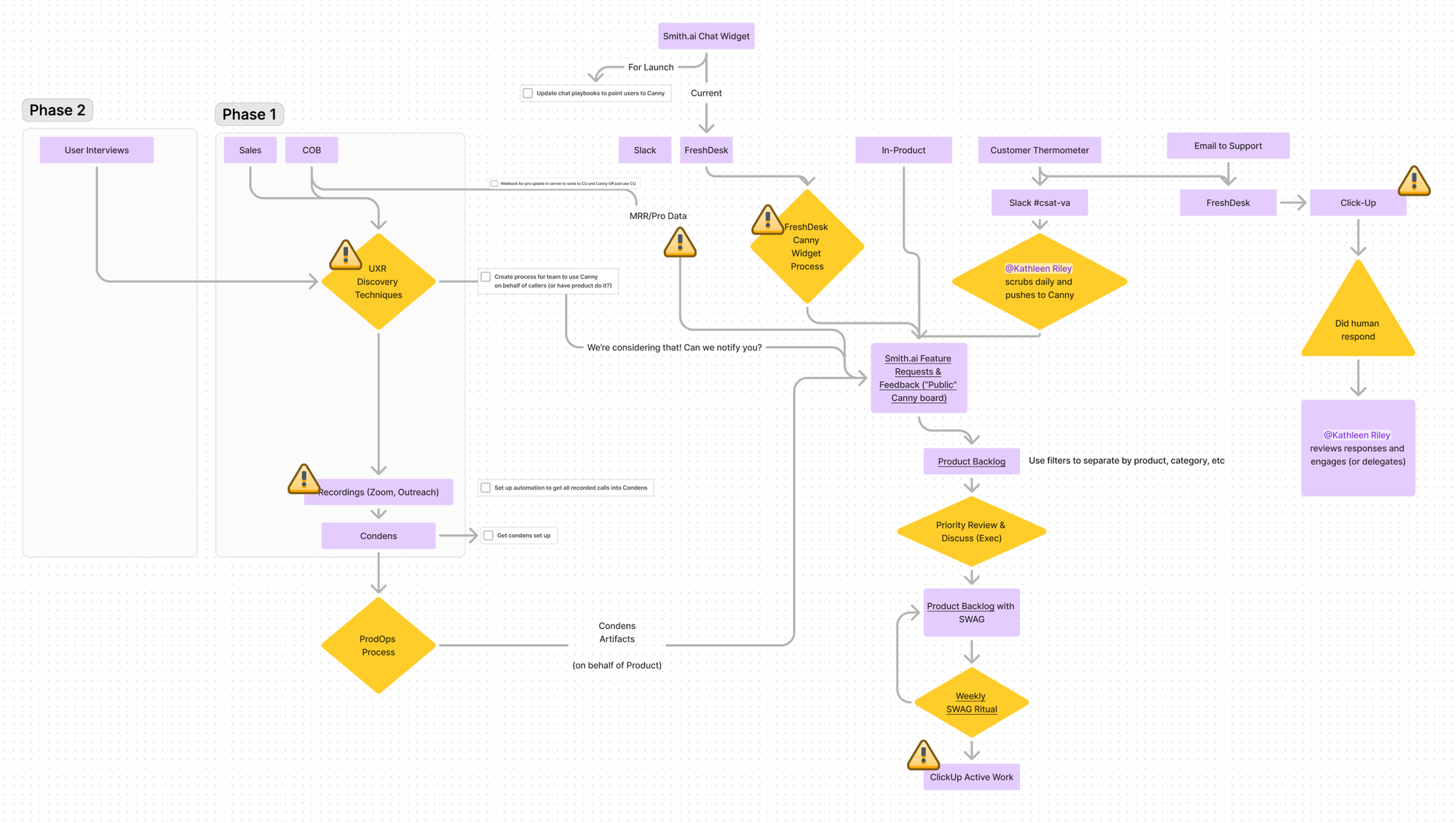
This system ensures that feedback flows seamlessly into the product development process, allowing us to prioritise high-impact changes. Regular reviews ensure that customer input directly informs the roadmap, creating a more responsive, user-focused development cycle.
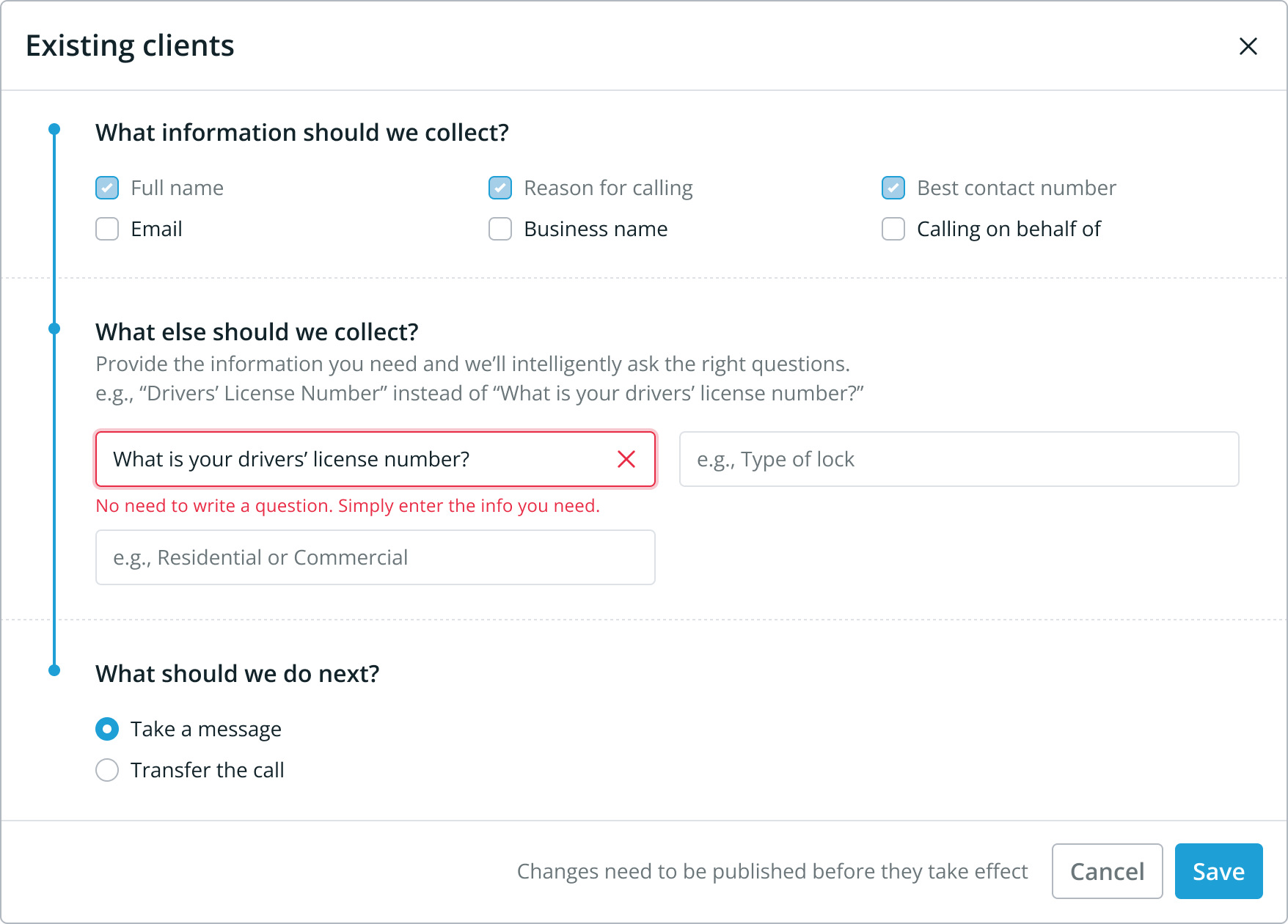
A good example is that, typically, customers want to ask specific questions of their callers but—through our testing—we discovered that writing explicit questions often resulted in a worse conversational experience.
To mitigate this we opted to only ask for the ‘information’ people needed but the initial design did not adequately set that expectation.
Customers tried to ask questions and ran into our character limit.
We learned about this pretty quickly and—using the strategy above—were able to learn about the expectations of users and how the interface differed from their mental models.
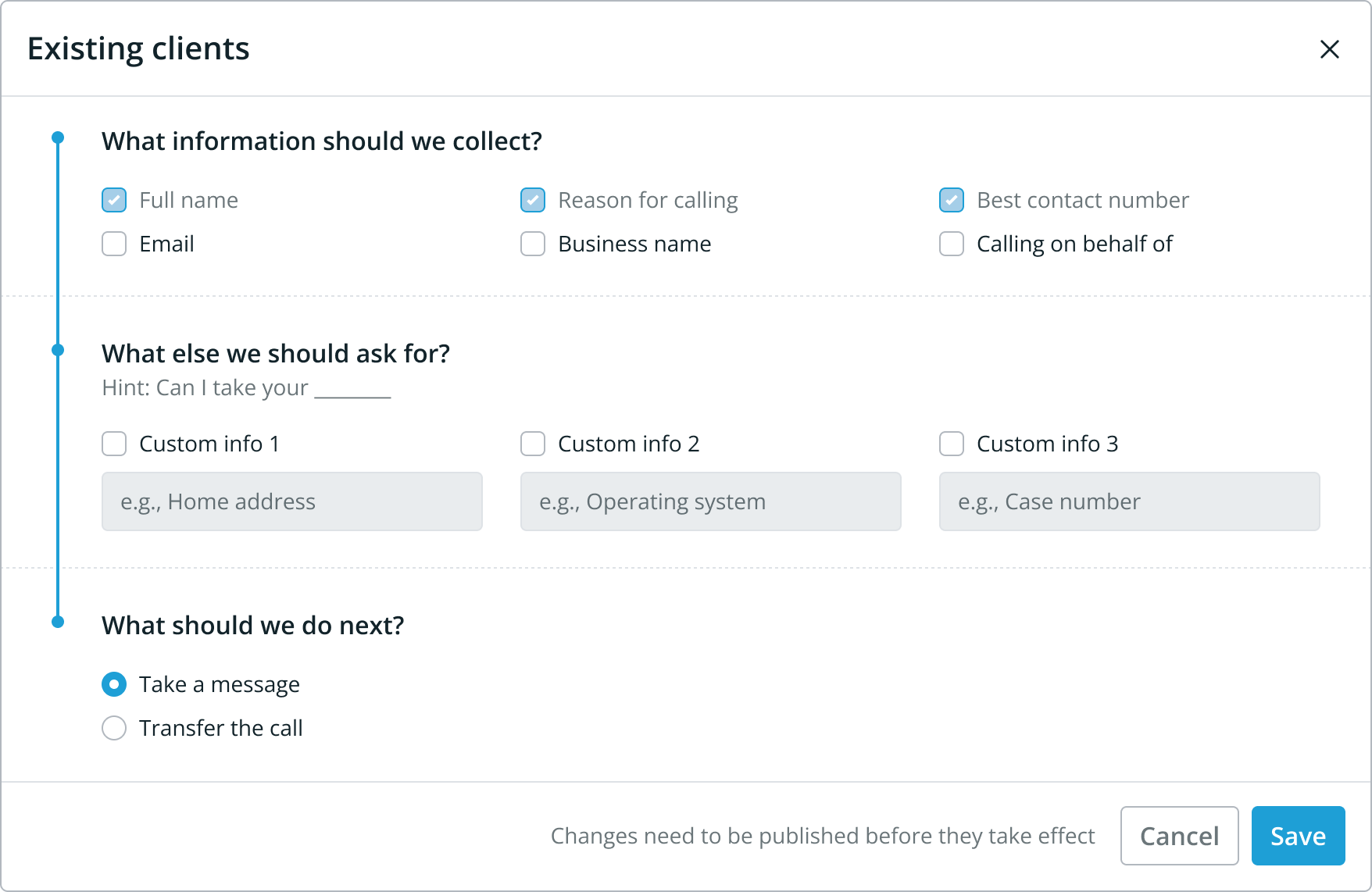
The solution was to reduce the friction for inputting information, give a real example of what is expected vs common, and to write some smart validation rules when someone still tries the common behaviour.
Pitfalls of LLMs
One of the most significant issues with large language models (LLMs) is their non-deterministic nature. When you ask the same question multiple times, the AI may generate different responses. This posed a challenge during development and QA, as it was difficult to predict exactly how the assistant would behave in every situation.
To address this, we developed an internal AI testing suite that simulated multiple conversations between the AI assistant and a synthetic AI caller. This allowed us to capture a range of possible responses, ensuring that the assistant remained on-brand and helpful even when generating different outputs for the same input.
Another key challenge was AI hallucinations, where the assistant would confidently deliver inaccurate information if it lacked proper data. We mitigated this by tightly controlling the data sources and creating fallback mechanisms. For instance, when the assistant didn’t have the correct data, it was trained to respond with a clarification or to defer to human input, rather than guessing.
Low-latency as a feature
Low-latency response times were crucial to the success of our voice assistant, especially in real-time phone conversations where delays can lead to a frustrating user experience. To address this, we optimized our backend infrastructure to minimize processing time, ensuring that the AI responded as quickly as possible.
We prioritized latency reduction across all services, from API response times to telephony integration, so that the assistant could handle conversational turn-taking naturally. As part of this effort, we used load balancing and cloud-based edge servers to reduce latency for customers in different regions.
Outcomes
The Voice Assistant launched in late 2023 and scaled to:
- Hundreds of paying customers in the first year
- 6 figures in ARR
- Thousands of calls handled per month with minimal human intervention
- Customer satisfaction scores comparable to our human service
The self-service model reduced time-to-value from weeks to minutes. Customers could sign up, configure their assistant, and start taking calls the same day.
What I Learned
Building an AI product that people actually pay for requires ruthless focus on reliability over novelty. The conversational design work was interesting, but the real challenge was making it work consistently enough that customers would trust it with their business calls.
The feedback system we built became essential. Without it, we would have been flying blind trying to improve a non-deterministic system.
If I did it again, I’d invest even more in testing infrastructure earlier. The AI testing suite saved us countless hours of manual QA, but we built it too late in the process.